The HAMR Is a Pacing Test Wearing a Sprint Costume
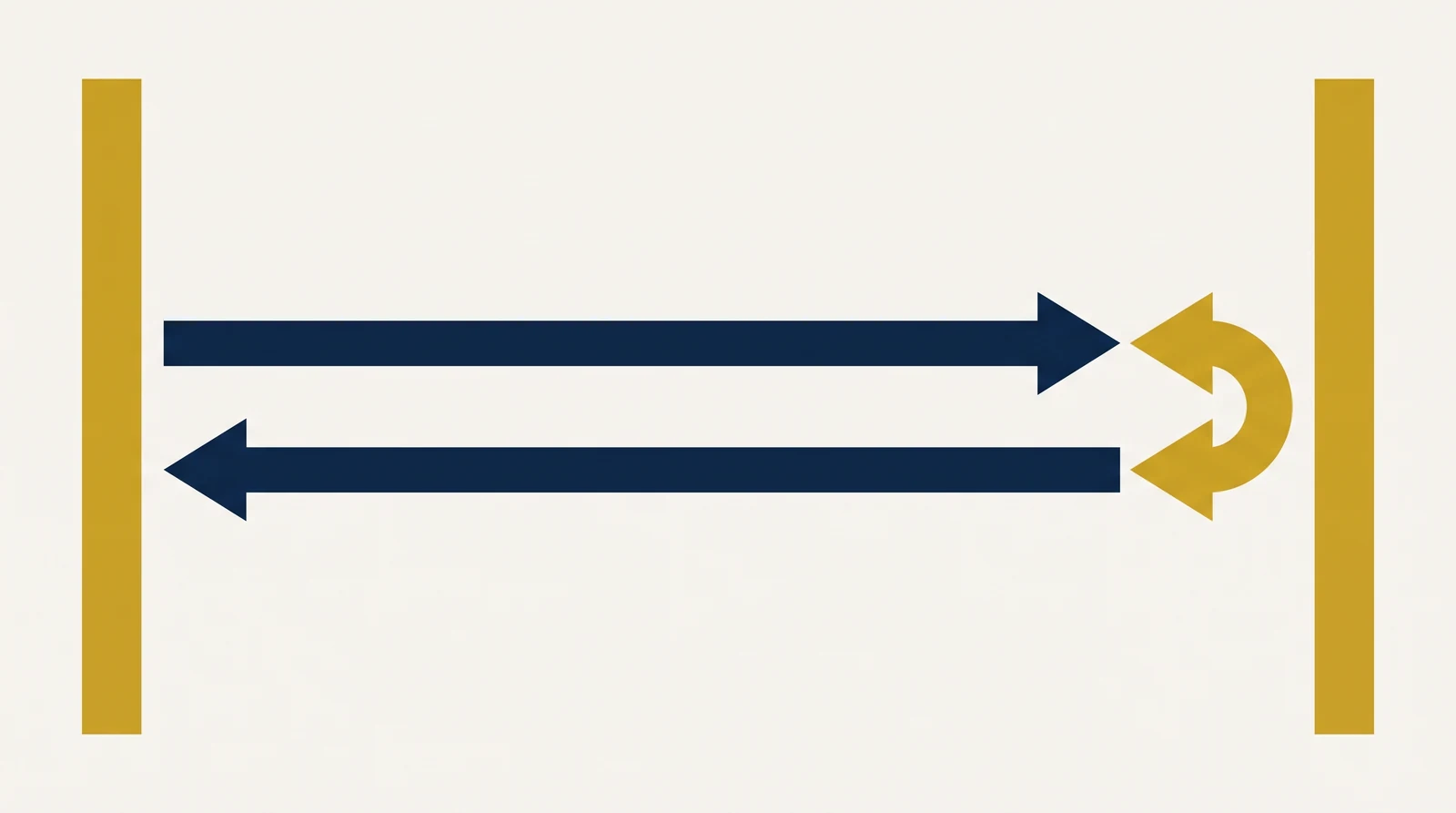
The 20-meter High Aerobic Multi-shuttle Run looks like a sprint drill, but scores are decided by efficiency in the early levels and the turns. Every length has a built-in pace: the beep. Energy you spend sprinting ahead, turning wide or re-accelerating from a dead stop is taken from the levels where you actually need it. For shuttle-to-points conversion, levels and the practice player, see the HAMR standards and converter; this page is about buying more shuttles with the fitness you already have.
Know the Rules That Decide Your Score
Technique only pays if it keeps you inside the rules. The administrator reads these to everyone before the test (AFMAN 36-2905, Attachment 2):
- Touch the line with one foot before the beep. If you are early, wait for the beep before you start back ¶A2.9.3.
- Late to the line, or leaving it too early, is a warning. Three consecutive warnings end the test; reaching the line on the next shuttle resets the count to zero ¶A2.9.4.
- If the beep beats you, finish that shuttle before turning. Stopping short and turning back, or resting or skipping a shuttle, ends the test ¶A2.9.5.
- Your score is the last successful shuttle completed before three consecutive warnings, or before you stop ¶A2.9.6. One late shuttle is not the end: make the next one and you are back to zero warnings.
The full rules, a worked example and the course requirements are on the HAMR rules section.
The Four Technique Rules
- What to Do
- Pace each length to touch the line a step early, then leave on the beep (AFMAN 36-2905 para. A2.9.3)
- What It Saves
- No late-arrival warnings, and no sprint-then-stand cycles that drain the tank
- What to Do
- Plant on the line, drop hips, push off low; no rounded turns
- What It Saves
- A fraction of a second and less braking force, on every length
- What to Do
- Switch which leg plants at each end
- What It Saves
- Shares the fatigue; protects calves and ankles late in the test
- What to Do
- First two steps out of the turn stay low and short
- What It Saves
- Reaches pace without the tall-posture lunge that wastes energy
| Rule | What to Do | What It Saves |
|---|---|---|
| Arrive just before the beep | Pace each length to touch the line a step early, then leave on the beep (AFMAN 36-2905 para. A2.9.3) | No late-arrival warnings, and no sprint-then-stand cycles that drain the tank |
| Pivot, don't loop | Plant on the line, drop hips, push off low; no rounded turns | A fraction of a second and less braking force, on every length |
| Alternate plant legs | Switch which leg plants at each end | Shares the fatigue; protects calves and ankles late in the test |
| Accelerate out low | First two steps out of the turn stay low and short | Reaches pace without the tall-posture lunge that wastes energy |
The Official 6-Week HAMR Program
The Warfighter’s Fitness Playbook 2.0 (Feb 2026, Appendix C) has a 6-Week HAMR Improvement Program with three sessions a week. Here is how it starts and where it ends:
- Week 1
- 4×200 m (60 s rest), 2×400 m (75 s rest), 3×30 m sprints
- Week 6
- 6×200 m sprints (60 s rest), 4×400 m sprints (75 s rest), 3×30 m sprints (60 s rest)
- Week 1
- 20 min sustained run, 5×100 m strides, 2×200 m sprints (60 s rest)
- Week 6
- 30 min sustained run, 8×100 m sprints with walk-back recovery, 4×200 m (60 s rest)
- Week 1
- Test your HAMR, then 4×20 m sprints (30 s rest)
- Week 6
- Test your HAMR, then 6×20 m sprints (30 s rest)
| Session | Week 1 | Week 6 |
|---|---|---|
| Day 1 | 4×200 m (60 s rest), 2×400 m (75 s rest), 3×30 m sprints | 6×200 m sprints (60 s rest), 4×400 m sprints (75 s rest), 3×30 m sprints (60 s rest) |
| Day 2 | 20 min sustained run, 5×100 m strides, 2×200 m sprints (60 s rest) | 30 min sustained run, 8×100 m sprints with walk-back recovery, 4×200 m (60 s rest) |
| Day 3 | Test your HAMR, then 4×20 m sprints (30 s rest) | Test your HAMR, then 6×20 m sprints (30 s rest) |
For the weekly HAMR test, run the practice player and save each result to its history, then check what it scores with the shuttle converter.
HAMR vs. 2-Mile: Choosing Your Cardio Event
- Likely Better Event
- 2-Mile Run
- Why
- Even-pace aerobic output is exactly what the run rewards
- Likely Better Event
- HAMR
- Why
- Early levels are cheap; speed buys the late levels
- Likely Better Event
- Test both carefully
- Why
- Shuttle turns load ankles and knees differently than steady running
- Likely Better Event
- Either, with the correction
- Why
- Table A3.4 adds 1–4 shuttles to a HAMR score; Table A3.1 lists run-time corrections (AFMAN 36-2905 para. 3.15.12.3)
| You are… | Likely Better Event | Why |
|---|---|---|
| A steady distance runner | 2-Mile Run | Even-pace aerobic output is exactly what the run rewards |
| Fast but fade over distance | HAMR | Early levels are cheap; speed buys the late levels |
| Coming back from lower-body injury | Test both carefully | Shuttle turns load ankles and knees differently than steady running |
| Testing at 5,250 ft or higher | Either, with the correction | Table A3.4 adds 1–4 shuttles to a HAMR score; Table A3.1 lists run-time corrections (AFMAN 36-2905 para. 3.15.12.3) |
Then decide with data, not preference: run both in practice two weeks apart, put both results into the HAMR vs 2-mile comparison, and take the higher-scoring event into the mock PT test to confirm your full-test readiness. If the 2-mile wins, its training plan is here.
Frequently Asked Questions
How does the HAMR shuttle run work?+
Should I choose the HAMR or the 2-mile run?+
What wastes the most energy on the HAMR?+
How should I turn on the shuttle run?+
How do I train for the HAMR specifically?+
Does altitude affect HAMR scoring?+
More in Training Guides
See exactly where you stand.
Enter your reps, times and waist measurement to get your 2026 PFRA score instantly.